| Homework due Oct. 27 | Name: | Section: |
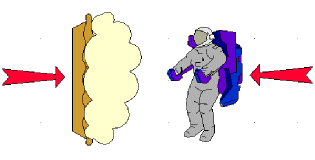
| A 77 kg astronaut, freely floating at 6 m/s is hit by a large 36 kg lemon cream pie moving oppositely at 9 m/s. How much thermal energy is generated by the collision? | |
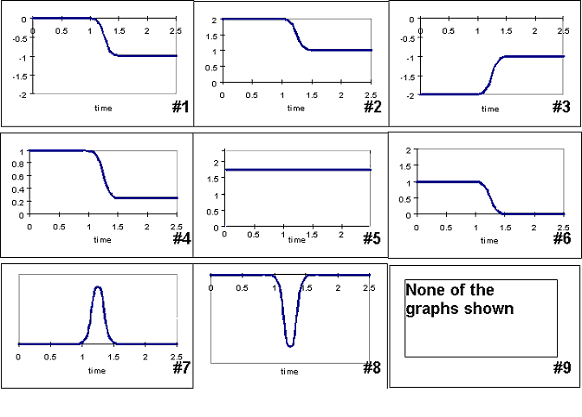
| Two identical carts labeled A and B are initially resting on an air track. The coordinate system for describing the system is shown. The cart on the right, cart B is given a push to the left and is released. The clock is then started. At t = 0, cart B moves in the direction shown with a speed v0. They hit and stick to each other. The graphs below describe some of the variables associated with the motion as a function of time. For the experiment described and for each item in the list below, identify which graph is a possible display of that variable as a function of time assuming a proper scale. "The system" refers to carts A and B together. |  |
| # |  |
| A student is in her dorm room, sitting on her bed doing her physics homework. The door to her room is open. All of a sudden, she hears the voice of her ex-boyfriend down the hall, talking to the girl in the room next door. She wants to shut the door quickly, so she throws a superball (which she keeps next to her bed for this purpose) against the door. The ball follows the path shown in the top-view diagram below. It hits the door squarely and bounces straight back. | 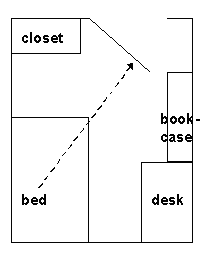 |