| 
|
| Instructor | Office | Phone | Office Hours | Zoom | |
|---|---|---|---|---|---|
| Professor Drew Baden | drew@umd.edu web site | 3208D PSC | 56069 | M,W 2-3pm or by appt | zoom |
| TA Chris Sherald | csherald@umd.edu | zoom or in PSC 3125 | 734-686-9016 | Th 4-6pm | zoom |
| TA Isaac Ashlind | ashlind@umd.edu | zoom or 3223 Atlantic | 520-432-9150 | Tu/Th 2-4pm | zoom |
| TA Jordan Gaines | jagaines@umd.edu | PHYS 2221 | use email | M 4:30-5:30 Tu,Th 12:30-1:30 | zoom |
| TA Chris Zapata | chriszap@umd.edu | PHYS 1214 | use email | M 3pm | zoom |
| Undergrad TA Anthony Angarita | aangar84@terpmail.umd.edu | use email or 240-972-0579 | MW 11:30-1 and Th 2-4pm | zoom | |
| Undergrad TA Mario Caceres | mdajanic@terpmail.umd.edu | none | use email or 202-823-5133 | M 2-4pm, F 11am-1pm or by appointment | zoom |
| Undergrad TA Paul Aler | paler@terpmail.umd.edu | none | use email or 443-789-3190 | M, W, F 10-10:50am | zoom |
| Sections | Time | Room |
|---|---|---|
| 0101-0106 | MWF 1-1:50pm | 1412 Toll Physics (PHY1412) |
| 0201-0207 | MWF 12-12:50pm | 1412 Toll Physics (PHY1412) |
| Section | Time | Room | TA |
|---|---|---|---|
| 0101 | W 2-2:50pm | PHY 1402 | Chris Sherald |
| 0102 | M 3-3:50pm | PHY 1402 | Chris Sherald |
| 0103 | W 11-11:50am | PHY 1402 | Isaac Ashlind |
| 0104 | Th 8-8:50am | PHY 1219 | Isaac Ashlind |
| 0106 | W 11-11:50am | PHY 1219 | Jordan Gaines |
| 0201 | M 9-9:50am | PHY 1219 | Isaac Ashlind |
| 0202 | M 10-10:50am | PHY 1219 | Jordan Gaines |
| 0203 | M 11-11:50am | PHY 1219 | Isaac Ashlind |
| 0204 | M 2-2:50pm | PHY 1219 | Chris Zapata |
| 0205 | M 4-4:50pm | PHY 1219 | Isaac Ashlind |
| 0206 | W 3-3:50pm | PHY 1219 | Chris Zapata |
| 0207 | F 11-11:50am | PHY 0405 | Jordan Gaines |
This is the 3rd semester of a 3-semester sequence of calculus-based general physics for engineering students. I believe you have to master this material to go on in your engineering career. We will study electrodynamics, optics, special relativity, and some introductions to quantum mechanics.
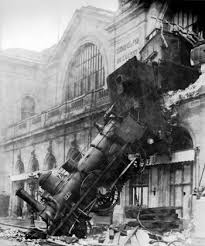
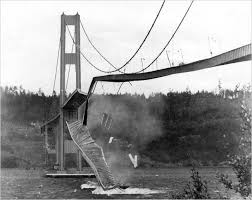
But maybe this course is more than just fulfilling requirements! As we know, the importance of good engineering in modern life cannot be overstated, and good engineering vs bad engineering (bad means mistakes!) can make a huge difference in all of our lives. Mistakes will happen, but it will be your job to guard against it. For instance, mistakes like these:
|
|
|
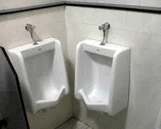
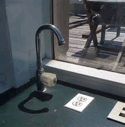
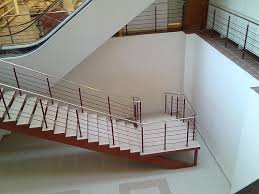
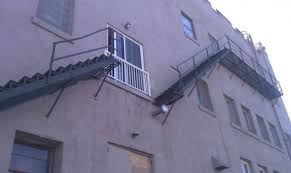
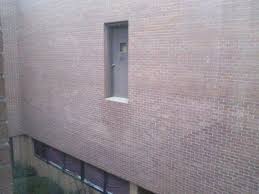
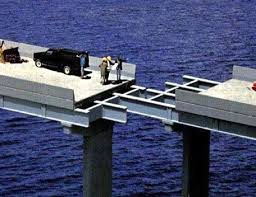
can cost lives and waste huge amounts of money. And, mistakes like these:
| 
| 
| 
| 
| 
|
can not only cost you your job, but also your self respect!
So hopefully you will not only learn something about the fundamentals of physics, but you will also learn a little about how think like a scientist/engineer, which I know will help you have a successful career in engineering. And, hopefully, to not make the above kind of mistakes!
Note that this class contributes to UMD's General Education program. The Dean of Undergraduate Studies says "General Education offers students foundational learning experiences and exposes them to a diversity of disciplines and ways of thinking, and are intended to build competence, expand your understanding of the world, and foster creativity."
This syllabus is available online with a browser at
The syllabus will also be available on the campus syllabus repository, which allows students to access it on Testudo. That is, if everything works as planned....sometimes that site doesn't work. Sigh...
Anyway, it will also be available on ELMS.
Homework problems will be assigned throughout the term, using an electronic format called ExpertTA. Access will be via ELMS. Log in with your UMD Directory ID. If you are registered for the course, you will see the course after login. Click on the course.
Note that ELMS (Canvas) uses some default email address that it assigns or gets from you. You should check the ELMS default setting to be sure that they have the right one, before you do anything on ELMS! Be careful here, for some ELMS defaults you might have a umd.edu email, for others a terpmail, etc. so this can get confusing unless you set things explicitly.
Once you are in the class in ELMS, click on Assignments and you will see the homework. I will add homework as we get into the chapter, but there is one already called "Intro to ExpertTA". Clicking on that first homework in ELMS will take you to the payment pages for ExpertTA. It should cost $50 to you. If you have any problems, contact ExpertTA support. After payment you will see the actual homework, note you only have to pay the first time. We recommend you register as soon as possible before the first day of class and do the "Learning Expert TA" assignment, which is there to help you get familiar with ExpertTA.
You should do the homework before the due date, because after that the web site will close the assignment and you will not be able to turn it in even if it's late without some kind of penalty.
Full solutions for the homework assignments will be discussed at the discussion session with the TA, and I will post the solutions on ELMS in the files tab.
Homework is how you train your mind. You are encouraged to work in any size group you feel comfortable with. But my advice is to not do the homework as a group, because I grade on a curve, but mostly because homework is like practice, and you have to be the one to puzzle through things, not just enter what the group decides to enter. Note that I've seen a very strong correlation between doing the homework regularly (and not falling behind) and getting a good grade.
The textbook for this course is a new and free online textbook which is pretty good, infinitely cheaper than the previous textbook, and online so you don't have to carry it around. We will be using chapters 16, 17, 34, 36-39 and parts of 40 and 41.
You will be able to access the books through expertTA, and I encourage you to do that because I intend to edit the text book and add materials (simulations, videos, etc). But you can also access the textbook directly online via:
Lecture notes will be available here, posted as PDF files that you can download:
ELMS has the homework assignments, a copy of the notes in pdf form, and a way for me to send email to everyone. But that's about it. I might use ELMS to post your grade for each exam, and the homework, at the end of the semester, but I won't be updating it for grading. So don't look at ELMS to see what grade you are getting because whatever ELMS has in it, it's not going to matter.
The notes are all in the "Files" tab, and have the form "Vol 1 Ch 16 Waves.pdf". But campus has rules now about how we can only upload materials that are ADA compatible (google that if you don't know what that means), so if the notes disappear from ELMS it is because campus told me to delete them. But they will still be available at the links in the "Notes" section just above.
There are also other various things I might put in the "Files" section on ELMS, like perhaps some pdf versions of powerpoint that I've collected over the years that I will try to show, maybe some math tutorials, etc. I will let you all know via email if I upload anything for you.
Lectures are intended to help you with acquiring a basic understanding of the material. I will go over the relevant chapters, with an emphasis on demonstrations and problem solving, and more importantly, technology and how things work. My advice is to attend all the lectures and not fall behind, as this is a very fast paced course and one of the most important tactics to employ to get a good grade is to keep up with the material, do the work, and not fall behind.
Also, note that I may use the lectures to make announcements, and if I do I will try to also send around an email using ELMS.
You will also have a discussion session each week, except at the beginning of the semester. The discussion session is designed to help you with your understanding of the material. My advice is to prepare in advance at least one question from the homework or the book that you are not sure about, and ask your TA to go over it. One piece of advice: don't go to the discussion and ask the TA to solve the problem, instead go and ask the TA to teach YOU how to solve the problem. There's a difference! After all, you don't learn to shoot jump shots in basketball by watching your TA do it!
We will have 3 "midterm" in-class exams, and a final. The midterms will cover 2-4 chapters, and the final will be comprehensive.
The following schedule is tentative for the midterms and the final but it might change depending on how the class goes and other circumstances, etc.
| Exam | Date | Covering: | Location |
|---|---|---|---|
| Midterm 1 | Mon, Mar 2 | Volume 1 Chapters 16/17 & Volume 3 Chapter 1 | All sections PHY 1412 |
| Midterm 2 | Mon, Mar 30 | Volume 3 Chapters 3/4 | All sections PHY 1412 |
| Midterm 3 | Fri, May 1 | Volume 3 Chapters 5 and parts of Chapter 6 | All sections PHY 1412 |
| Final | Thur May 14 8:00-10:00am | Comprehensive | Sections 010* PHY 1412 |
| Sections 020* CHM 1407 |
The dates for the midterms are subject to change based on how well we are doing getting through the material, the weather, bomb threats, fire, etc. But for the most part you can pretty much count on those dates in the above table.
On exam day, bring a calculator and writing tools (pens or pencils). You are not allowed to use your mobile device during the exam (we have to make a level playing field, which means no one can have the advantage of using google!), so be sure to bring a separate calculator (not the one on your smart phone!).
All exams are closed-book and closed-notes. However, you should prepare and bring a formula sheet (both sides are ok for formula) containing equations and values of fundamental constants, but EMPHATICALLY NO PROBLEM SOLUTIONS. The exam proctors may ask to take a look at your formula sheet, and if there are any problem solutions there, they may make you take the exam without it!
When the exams are handed back, I will post a distribution on ELMS (or somewhere if ELMS won't let me, I'll let you know) so that you can get an idea of how well you did relative to the class as a whole.
Note: only 2 of the midterm exams will be used in calculating your final grade for the course.
I do this because in the complicated modern life, sometimes you will have to miss exams for all sorts of reasons (illness, family, legal, completely overloaded, etc). I have found that make-up exams are inherently unfair to the person who takes them (they are usually harder than the scheduled exam). So, to make things simpler, I will drop the lowest of the 3 midterm grades when making up your final grade. FYI, to do this, at the end of the semester I will normalize all 3 exams to have the same mean and standard deviation, and will use the two exams that have the best score relative to the mean and standard deviation for your grade, dropping the exam with the lowest score. This means that if you have to miss an exam, then I will drop that exam from your grade.
Note that if you miss the final, however, you will receive an incomplete (I) for the course provided that you have a passing grade up to that point.
Final exam
The final exam will be comprehensive. The date for the final exam is set by campus and will definitely be held at the noted time and date, however the campus final exam schedule has not yet been made official, so you should check here periodically (they say "mid semester). We will announce the location when the campus tells me.
Your final score will be based on your overall score for Homework, Midterms, and Final, using the following weights:
| Homework | 15% |
| 2 Midterm exams | 50% |
| Final exam | 35% |
As stated above, I will drop the lowest of the 3 midterm exam scores. The final letter grade will be based on the distribution of final scores for the entire class (this is called "curving"). That is, this is not one of those courses where you know what letter grade you get from the scores of each exam etc, you will have to wait.
Below is a preliminary schedule for what I will try to cover. However, given that life is full of fluctuations, and that we should all be flexible, I may make adjustments along the way. I will try to stick with the exam dates below, but as the semester progresses, we may have to make changes. If we do, I will discuss them with you beforehand.
Sections 0101-0106, MWF 1:00-1:50
Sections 0201-0207, MWF 12:00-12:50
All lectures are in Toll Physics 1412 (PHY1412)
| Month | Monday | Wednesday | Friday | |||
|---|---|---|---|---|---|---|
| January | 26 | Introduction | 28 | Volume 1 Ch 16 Waves | 30 | Ch 16 Waves |
| February | 2 | Ch 16 Waves | 4 | Ch 16 Waves | 6 | Ch 16 Waves |
| 9 | Ch 17 Sound | 11 | Ch 17 Sound | 13 | Ch 17 Sound | |
| 16 | Ch 17 Sound | 18 | Volume 3 Ch 1 Light | 20 | Ch 1 Light | |
| 23 | Ch 1 Light | 25 | Ch 1 Light | 27 | Ch 3 Interference | |
| March | 2 | Exam 1: Waves, Sound, Light | 4 | Ch 3 Interference | 6 | Ch 3 Interference |
| 9 | Ch 3 Interference | 11 | Ch 4 Diffraction | 13 | Ch 4 Diffraction | |
| Spring Break (March 14-22) | ||||||
| 23 | Ch 4 Diffraction | 25 | Ch 4 Diffraction | 27 | Ch 5 Relativity | |
| 30 | Exam 2: Interference, Diffraction | |||||
| April | 1 | Ch 5 Relativity | 3 | Ch 5 Relativity | ||
| 6 | Ch 5 Relativity | 8 | Ch 5 Relativity | 10 | Ch 5 Relativity | |
| 13 | Ch 5 Relativity | 15 | Ch 5 Relativity | 17 | Ch 5 Relativity | |
| 20 | Ch 5 Relativity | 22 | Ch 5 Relativity | 24 | Ch 6 Photons | |
| 27 | Ch 6 Photons | 29 | Ch 6 Photons | |||
| May | 1 | Exam 3: Relativity, Photons (partial) | ||||
| 4 | Ch 6 Photons | 6 | Ch 6 Photons | 8 | Ch 6 Photons | |
| Final Exam: time and room TBD | ||||||
Here are a few link(s) that I've added over the semester:
Campus maintains a calendar, and they are pretty serious about it. You might want to be sure you are familiar with it. Just click on the previous link.
It goes without saying that you are on your honor to play fair and not cheat. And as future engineers, you will find that cheating never works, and people who cheat end up falling behind one way or another eventually. Espcially in engineering! Anyway I don't expect any of you will be dishonest, but I have to pass along the following:
The University of Maryland has a nationally recognized Code of Academic Integrity, administered by the Student Honor Council. This Code sets standards for academic integrity at Maryland for all undergraduate and graduate students. As a student, you are responsible for upholding these standards for this course. It is very important for you to be aware of the consequences of cheating, fabrication, facilitating academic dishonesty, and plagiarism. Violations will be taken very seriously and may result in an XF grade for the course and possible suspension. For more information on the Code of Academic Integrity or the Student Honor Council, please visit http://www.shc.umd.edu/.
Working together with other students is part of the course; in fact, the tutorials and labs are specifically designed around teamwork. Working together to figure out the homework is also encouraged, but you must turn in your own work. Talking about how to work the problem is fine if it helps you to understand it better, but COPYING A SOLUTION IS STRICTLY FORBIDDEN. IF CAUGHT ENGAGING IN SUCH ACTIVITIES, YOU MAY BE REFERRED TO THE STUDENT HONOR COUNCIL.
If you need to miss class, a deadline, or an exam due to a religious observance, please notify me in advance, preferably at the beginning of the semester.
Accommodations will be provided to enable students with documented disabilities to participate fully in the course. Please discuss any needs with me at the beginning of the semester so that appropriate arrangements can be made. Students who are registered with DSS, and who are planning to take examinations at DSS facilities, are required to let me have the pertinent authorization forms in editable electronic format at least one week prior to each exam date.
If the University is closed due to inclement weather or some emergency situation on the scheduled date of an exam, then the exam will be given during the next class period when the University is open. If the University is closed on any non-exam day, including just before an exam, then the exam will still be given according to the original schedule. In these or other exceptional circumstances, I will attempt to send out information by email.
I will be sending important announcements to the class via ELMS.
I am pretty sure (but not 100%) that ELMS
uses your terpmail address, but anyway please make sure that the email address in
ELMS is one that you use regularly.
If you have a question, and you can't get to the TA or to my office hour,
then you can send it to me via email. I will respond as soon as I can.
Unless indicated otherwise, any lecture handouts, exams, homework and exam solutions,
and the lectures themselves (including audio and video recordings) are copyrighted by
me and may not be distributed or reproduced for anything other than your personal use
without my written permission. (The University makes me say this!)